
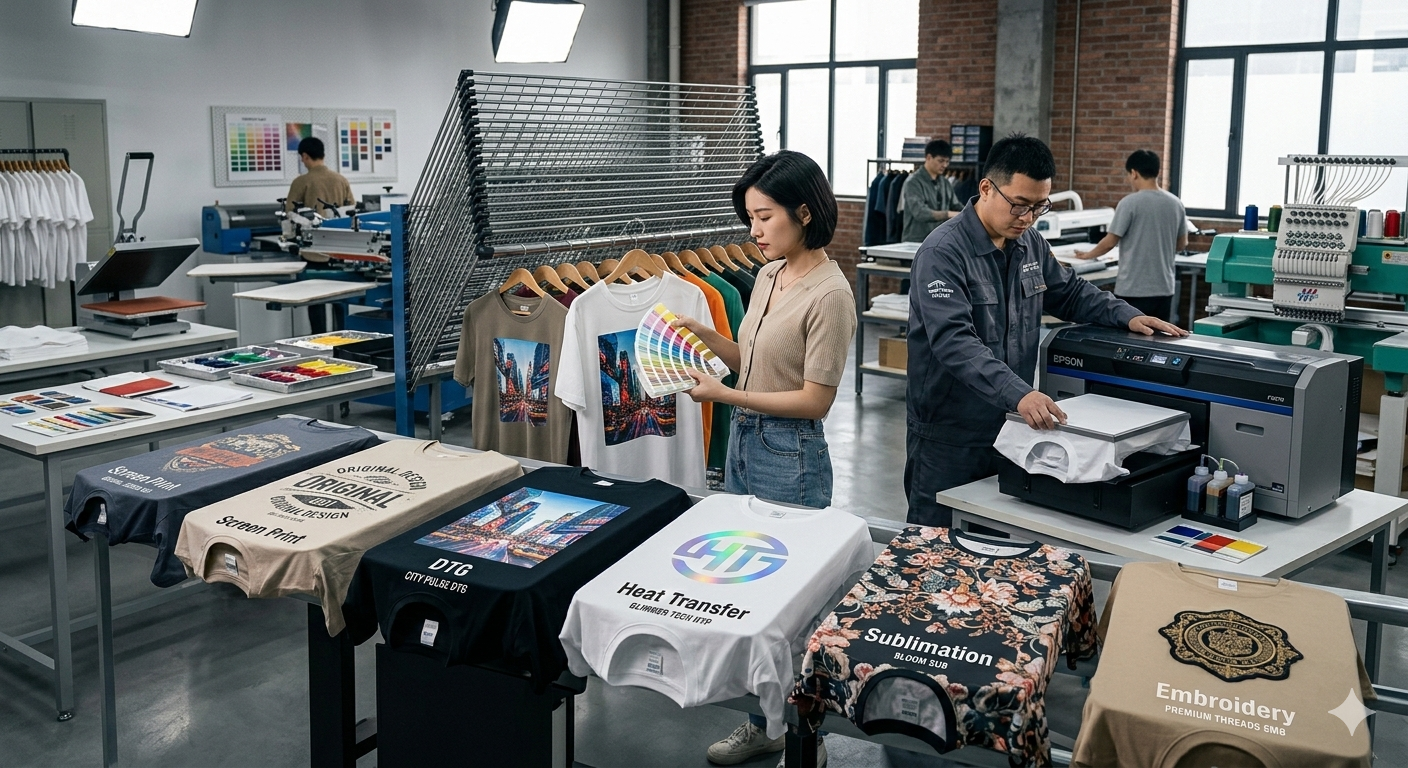
Master Custom T-Shirt Printing in 2026: Top Methods for Any Need
You planned the venue, guest list, and brand identity — but when the merchandise arrives, the colors are dull, the logo feels thick and plasticky, and the print peels after one wash. For event planners and marketing managers in Singapore, poor-quality custom t-shirt printing damages professional image and wastes budget. The solution in 2026 is matching design, fabric, and printing method so your apparel looks great, feels comfortable, and lasts.
Key takeaways: choose the right technology for the fabric and quantity, supply high-fidelity files (vector where possible), consider breathability for humid climates, and vet suppliers on inks and curing processes. This guide walks through why prints fail and how to select DTG, DTF, screen printing, embroidery, and mixed-media solutions to suit your needs.
Why Do Your Custom T-Shirts Often Fall Short? Analyzing Common Printing Failures

Most failures in custom t-shirt printing are not random — they result from mismatches between design, fabric, and method. Common friction points include improper ink-to-fabric bonding, heavy print “hand-feel,” poor color management, and designs that block breathability. Understanding these issues helps you specify the right process up front and avoid disappointing results.
Does the print crack or peel after a few washes? Exploring the key to durability and film quality
Cracking usually comes from low-quality heat transfers or poorly cured screen prints. Thick plastisol or low-grade PET films can’t stretch with the fabric. In 2026, newer flexible inks and thinner “hot peel” films reduce cracking. When sourcing work, ensure your printing company in Singapore uses premium adhesives and correct curing temperatures to prevent prints from peeling.
Feeling hot and uncomfortable after putting it on? Clarifying the conflict between large-area printing and fabric breathability
Singapore’s humidity exposes “sweat shield” problems: large solid prints that trap heat. For outdoor events, prioritize air permeability — break large designs with negative space or use breathable methods like DTG or sublimation. Avoid blocking all pores of the fabric to keep wearers comfortable and positive about your brand.
Color discrepancies and blurred patterns: Why your design looks great on screen but different when printed
Screen RGB vs. print CMYK/Pantone differences and insufficient resolution cause color shifts and muddy details. Provide high-resolution files (300 DPI or vector formats like .AI/.EPS) and supply Pantone codes for brand colors. Without proper file prep and color management, vibrant on-screen art can become dull or blurry in print — a classic issue in personalized shirt printing.
2026 Professional Guide: Choosing the Best Printing Technology Based on Fabric and Scenario

The one-size-fits-all approach is dead. Match the technology to the use case: DTG for high-detail cotton pieces, DTF for versatile fabrics and sportswear, screen printing for large runs, and embroidery or mixed media for premium corporate items.
Direct-to-Garment (DTG): High-end choice for preserving cotton feel and photo-level full-color printing
DTG sprays ink into fibers for nearly no texture and excellent detail. Best for detailed illustrations and photos on 100% combed cotton. Modern DTG machines use eco-friendly water-based inks for vibrant results, ideal for retail-quality corporate gifts and limited-edition merch. See expert resources like Printify’s DTG guide.
Direct-to-Film (DTF): A universal solution that breaks sweat-wicking material limits, balancing vibrancy and cost
DTF prints onto a film, adds powder adhesive, then heat-presses to the garment. It adheres to nearly any fabric — polyester, nylon, treated synthetics — making it excellent for sports jerseys and dry-fit shirts. Newer films in 2026 are thinner and more breathable. For trends, see DTF trends.
Screen Printing Services: Pursuing extreme cost-performance and durability for large-batch team apparel customization
Screen printing remains the best value for large orders. Higher setup cost per color, but per-unit cost falls dramatically at scale. It produces very durable prints that sit deep in fibers. Not ideal for photographic detail or very high color counts, but unbeatable for bulk t-shirt printing and long-lasting workwear.
Computer Embroidery and Special Processes: Enhancing brand quality for corporate anniversary dinners and high-end product launches
Embroidery gives a premium, tactile finish and longevity. Mixed-media approaches (DTF print with embroidered outlines) are increasingly popular to create high-fashion, wearable merch. When seeking a premium finish, check suppliers that offer these options and understand how they elevate brand perception. Learn more about selecting providers at how to choose a printing service.
From Budget to Finished Product: How to Develop the Best Customization Strategy Based on Quantity and Purpose?

Procurement is strategic: you are buying a marketing asset, not just shirts. Align order volume with the right technology to maximize ROI. Consider break-even points, fabric choices for activity, and strict file preparation to ensure results match expectations.
Small Batch Customization vs. Mass Production: Finding the cost threshold between digital and screen printing
Selecting the right print method depends on order size and cost efficiency:
- DTG (Direct‑to‑Garment) – Digital printing directly onto the shirt with no setup fees, making it cost‑effective for very small orders and complex, multi‑color designs, but higher per‑unit cost regardless of quantity.
- DTF (Direct‑to‑Film) – Prints onto transfer film and then heat‑presses onto the garment. Like DTG, it avoids setup charges and stays economical under ~30–50 pieces, with relatively consistent per‑shirt costs.
- Screen Printing – Traditional stencil‑based method with front‑loaded setup fees (screen costs per color) but dramatically lower per‑unit costs as quantity increases.
- Cost crossover / break‑even point – Because screen printing’s setup costs get spread over more shirts, it typically becomes cheaper per shirt than DTG/DTF once you exceed ~50 pieces (and increasingly so by ~200+ units).
- Why this matters – Planning your print method based on expected volume lets you avoid unnecessary costs: digital methods win small runs, but screen printing lowers unit costs on larger runs and is especially efficient for simpler designs.
This summary gives you the pricing logic and typical break‑even insight used in apparel production cost comparisons (similar to Argus Apparel analyses).
Outdoor Activities and Team Building: Targeted advice for sweat-wicking materials and wear resistance
Choosing the right fabrics and printing methods keeps performance apparel functional and comfortable.
- Moisture-wicking fabrics – Interlock or eyelet polyester draws sweat away from the body, keeping wearers dry during physical activity.
- Sublimation printing – Dyes are infused directly into light-colored polyester fibers, creating durable, vibrant prints without affecting breathability.
- DTF printing for dark fabrics – Direct-to-Film works well for dark performance materials where sublimation isn’t effective.
- Logo placement & size – Keep logos smaller or use distressed designs to maintain fabric breathability and comfort.
This ensures printed apparel looks great without compromising athletic performance.
File Preparation Secrets: Ensuring vector graphics and resolution meet 2026 latest printing standards
Providing the right file formats and specifications ensures high-quality, brand-consistent printing:
- Vector logos (AI, SVG, PDF) – Scalable graphics that can be resized infinitely without losing quality, ideal for large prints or multi-format use.
- Raster art at 300 DPI – High-resolution images at final print size to prevent pixelation in DTG, DTF, or other print methods.
- Remove unwanted backgrounds – Transparent backgrounds avoid white boxes or borders on prints, especially important for garment printing.
- Pantone color codes – Exact color matching for brand consistency across different materials and print processes.
This ensures your visuals are crisp, accurate, and ready for any production workflow.
2026 Printing Technology Quick Comparison Table: Seeing Which Solution Suits You Best
| Feature | Screen Printing | Direct-to-Garment (DTG) | Direct-to-Film (DTF) | Embroidery |
|---|---|---|---|---|
| Best For | High volume / Bulk orders | High detail / Low volume | Versatile fabrics / Vibrant | Premium / Corporate |
| Min. Quantity | High (usually 20+) | Low (1+) | Medium (5+) | Medium (10+) |
| Color Detail | Limited (Spot colors) | Unlimited (Photo-quality) | High (Vibrant gradients) | Limited (Thread colors) |
| Durability | Excellent | Good (if washed carefully) | Very High | Exceptional |
| Breathability | Low (in large areas) | High (Ink is in fibers) | Medium | N/A (Small areas only) |
| Fabric Type | Cotton & Blends | 100% Cotton | Everything | Thick fabrics / Caps |
Selecting the Right Partner in Singapore
When choosing suppliers, don’t focus solely on price. Ask about curing processes, ink brands, and quality control. A reputable printing company in Singapore should provide samples and explain why a method suits your design and target fabric.
Final Thoughts on Dominating Your Event Branding
Great event apparel is the result of aligning design, technology, and wearer experience. Avoid sweat shields and cracking by choosing breathable fabrics, appropriate print technologies, and high-quality suppliers. When shirts fit well, feel comfortable, and look professional, they extend your brand reach far beyond the day of the event. At SGDesign Pro, great event apparel comes from good design, the right printing, and comfortable, well-fitting shirts that make your brand shine.
Frequently Asked Questions
Which method is best for sports jerseys and dry-fit shirts?
DTF is ideal for dark performance fabrics; sublimation is best when working with light polyester because it dyes fibers and preserves breathability.
How many pieces before screen printing becomes cheaper?
Digital methods are usually best under 30–50 pieces. Screen printing often becomes more cost-effective after that range and shines at 200+ units.
What file formats should I provide to avoid printing issues?
Provide vector files (AI, SVG, PDF) for logos and 300 DPI raster files for photos. Include Pantone codes for exact brand colors and ensure transparency where required.